The Elder Futhark
The Elder Futhark is the oldest of the runic alphabets, cut into stone, metal and bone across northern Europe from around the second century onward. It is named for the sounds of its first six letters. The oldest complete row of it to survive is the one on the Kylver stone in Gotland, cut around 400 AD, and that is the order used here.
Each rune is given the stanza the Old English Rune Poem provides for it, in Bruce Dickins’s translation of 1915.
24 runes, free to browse and free to keep
 Fehu
Fehu
 Uruz
Uruz
 Thurisaz
 Ansuz
Ansuz
 Raido
Raido
 Kaunan
 Gebo
Gebo
 Wunjo
Wunjo
 Hagalaz
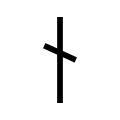 Naudiz
 Isaz
Isaz
 Jera
Jera
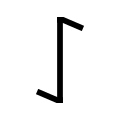 Eihwaz
 Pertho
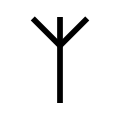 Algiz
Algiz
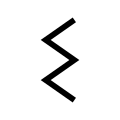 Sowilo
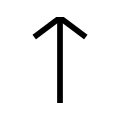 Tiwaz
Tiwaz
 Berkanan
 Ehwaz
Ehwaz
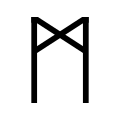 Mannaz
 Laguz
Laguz
 Ingwaz
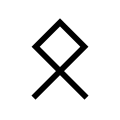 Othala
 Dagaz
Dagaz
The Rune Poem describes the Anglo-Saxon futhorc, which grew out of the Elder Futhark rather than being the same alphabet. Each stanza therefore belongs to the Old English rune that continues the one shown, not to the Elder Futhark rune itself. Most rune pages pass over that in silence; every page here says so.
Inscriptions from the 2nd century onward; the Kylver stone, c. 400 AD. Poem printed 1705, translated 1915. The text and the runes are in the public domain.
The Ars Goetia — The seventy-two spirits of the Lesser Key of Solomon, each with the seal set down beside it. 72 seals.
The Olympic Spirits — The seven governors of the Arbatel, who divide the world between them and each rule it in turn for 490 years. 7 characters.
The Pentacles of Solomon — Forty-four pentacles from the Key of Solomon, seven to a planet, each with the use the book puts it to — many of them protective. 44 pentacles.
The Angels of the Days — The seven angels who govern the days of the week, each with the sigil the Heptameron sets beside him. 7 sigils.